
What “upper cervical” means
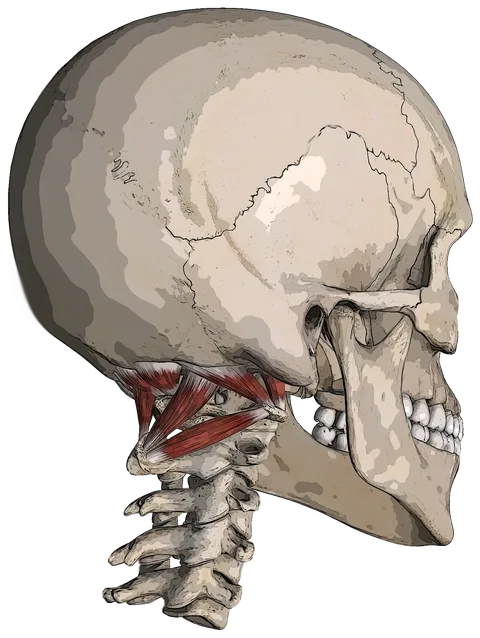
The upper cervical spine is the top of your neck — the first two vertebrae, called the atlas and axis, where your head meets your spine. This area allows a large share of your head’s turning and nodding, and it’s where many people with neck tension and certain headaches notice stiffness or restriction.
Upper cervical chiropractors focus on examining this region carefully and, when it’s appropriate, adjusting it with a very specific, light, hand-delivered force.
Two precise ways to adjust the upper neck
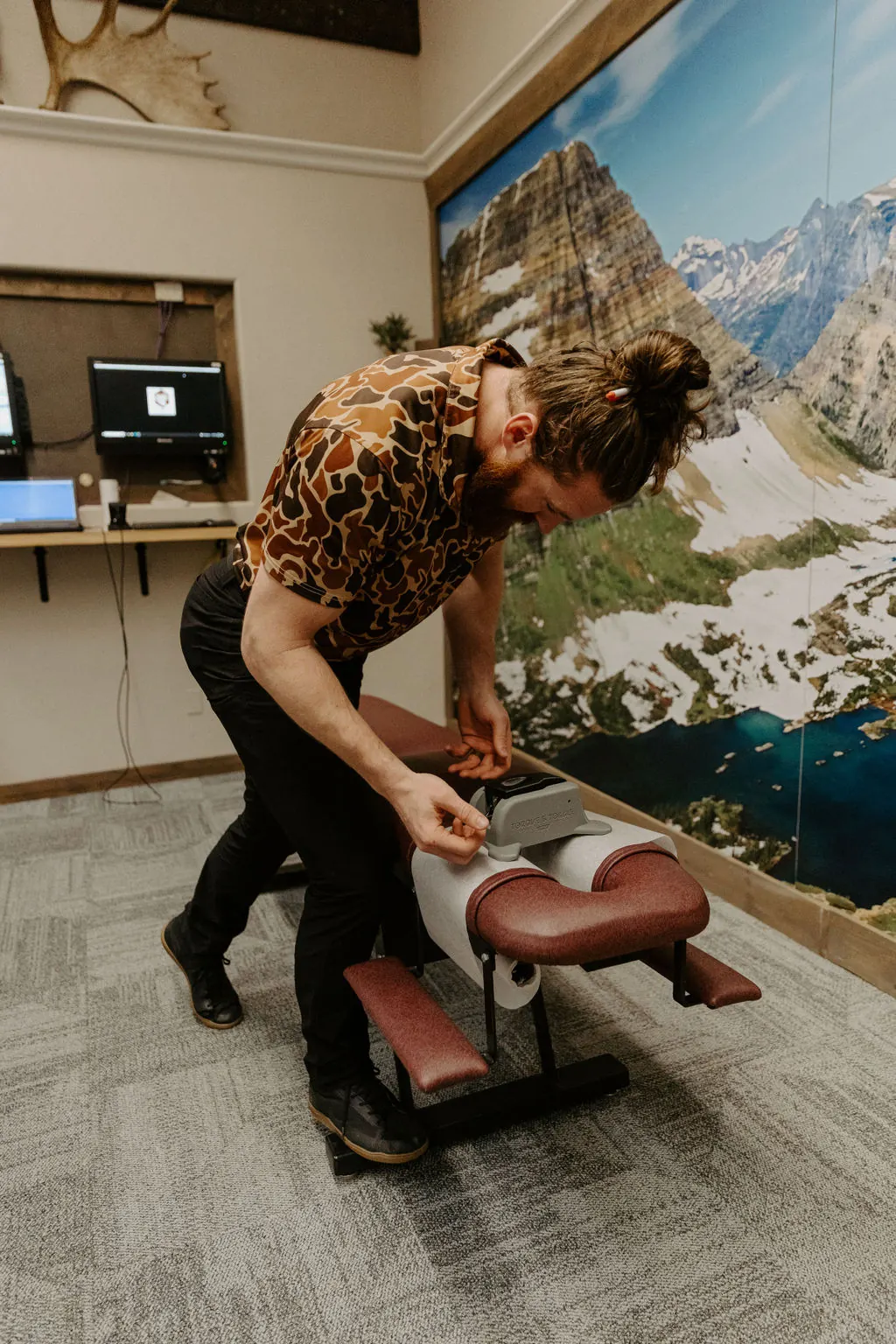
Dr. Reid is certified in the Knee Chest upper cervical technique and also uses side-posture toggle adjustments. He chooses the approach that suits you and your findings.
- Knee Chest. You kneel and rest your chest on a padded table designed for this position. It feels a little unusual the first time, but it’s stable and supported.
- Side-posture toggle. You lie on your side with your head supported on a padded headpiece.
In both, Dr. Reid delivers a quick, light, hand-delivered adjustment to the upper neck. There is no twisting or cranking of the neck. Your examination and in-house X-rays guide each adjustment, so we aren’t just guessing.
More than the upper neck
Upper cervical care is our emphasis, not our only tool. When the exam shows it’s appropriate, Dr. Reid also adjusts the mid and low back, pelvis, and extremities such as shoulders, hips, knees, ankles and wrists. Care is built around what your evaluation shows, not a single technique for everyone.
How we evaluate
Every new patient starts with a conversation and an examination. Depending on your history and findings, your evaluation may include:
- Consultation and health history. What you’re experiencing, what you’ve tried, what matters to you, and any warning signs that need a different kind of care.
- Physical and neurological examination. Movement, posture, reflexes, strength and sensation.
- Balance and weight-distribution assessment. You stand on a pair of scales or a balance platform so we can see how evenly you carry your weight. It’s a quick way to track one aspect of function over time.
- Tytron thermographic scan. A handheld instrument measures small skin-temperature differences along both sides of the spine. We typically scan at each visit, and twice during your initial evaluation, as one input to track patterns over time. It doesn’t diagnose disease or take a picture of your nerves.
- In-house X-rays. We use in-house X-rays to guide our adjustments, so we aren’t just guessing.
What these tests can and can’t tell us. None of these tools measures your nervous system directly, and none of them alone establishes a diagnosis. Together with your history and exam, they help Dr. Reid decide whether chiropractic care is appropriate for you, plan it, and objectively check progress.
Your care, step by step
- Evaluation (visit 1). History, examination, measurements and X-rays. No adjustment yet.
- Recommendations (visit 2). Dr. Reid explains what he found, whether he thinks chiropractic care is likely to help, what he recommends and why — and what it will cost. You decide whether to start.
- Specific adjustments. If you begin, your first adjustment typically happens at visit 2, then where your exam shows it’s needed.
- Rest and recover. After each adjustment, you’ll typically rest for about ten minutes in a Human Touch zero-gravity chair, giving your adjustment time to settle in and giving you a short break from a busy day.
- Home care. Simple exercises and practical lifestyle guidance, so progress doesn’t depend only on office visits.
- Re-examinations. At planned checkpoints — typically around your 16th and 30th visits — we review your symptoms, function, goals and relevant findings, and talk honestly about progress. We retake X-rays at re-examinations to compare with your starting images and see your progress. If you’re not improving as expected, we change the plan or refer you.
What the evidence says
Spinal manipulation and mobilization have research support for some kinds of neck pain, back pain and certain headaches, though results vary and the quality of evidence is mixed. Research specific to upper cervical techniques is limited. We’ll be straightforward about what’s known, what isn’t, and when another provider would serve you better.
Like any health care, chiropractic carries some risk. Mild, temporary soreness is common; serious complications are rare. We screen carefully and discuss benefits, risks and alternatives before any adjustment.