
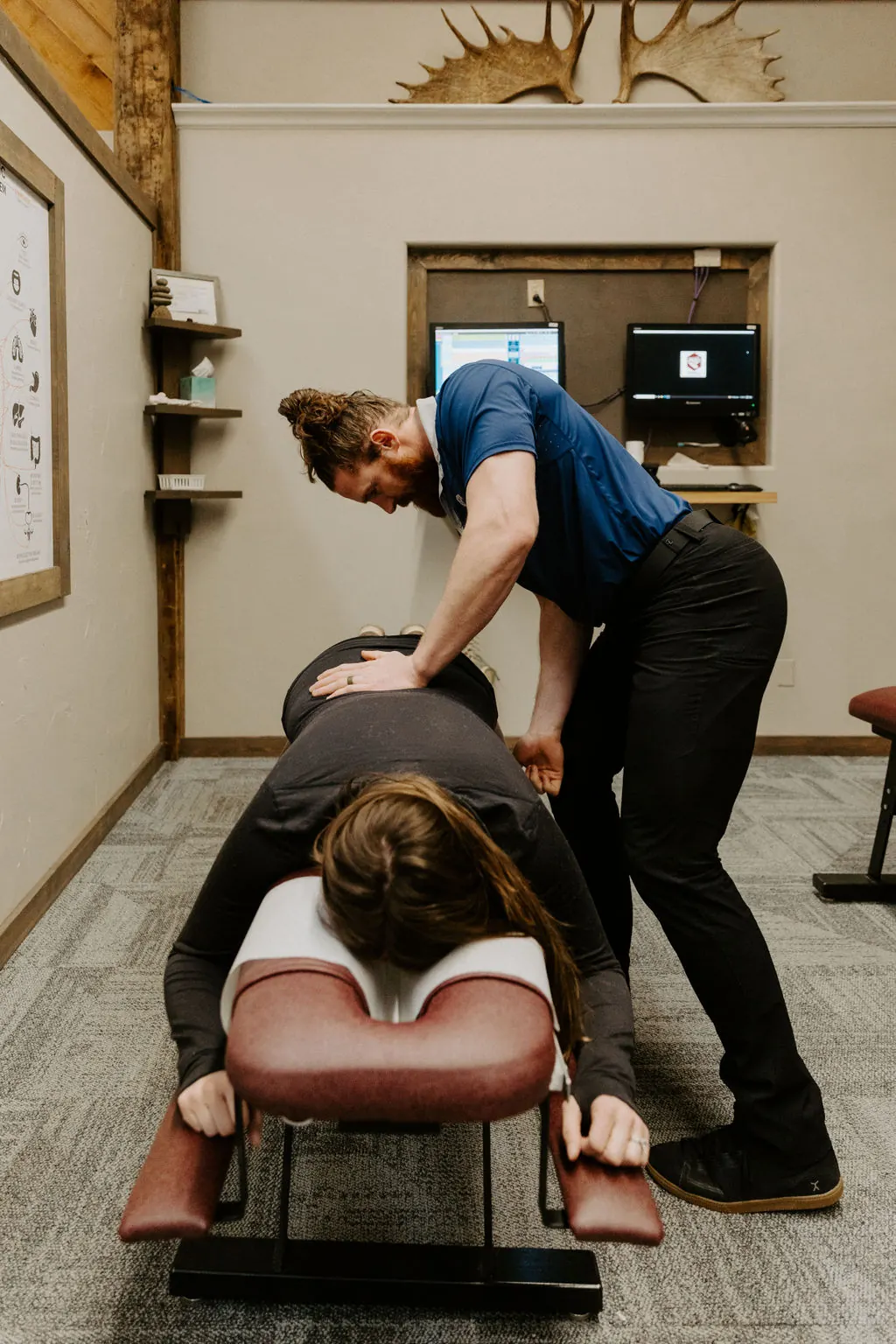
Common reasons people come in
- Neck stiffness or pain, especially with turning your head
- Tension across the shoulders and upper back
- Low back pain with sitting, bending, lifting or sleeping
- Discomfort that keeps coming back after a few good weeks
How we approach it
Your care starts with a careful evaluation: your history, how and when it hurts, how you move, and a physical and neurological exam. We screen for anything that needs a different kind of care, and we use in-house X-rays to guide our adjustments, so we aren’t just guessing.
If chiropractic care is a good fit, your plan may include specific adjustments to the upper neck and other areas of the spine, extremity adjustments when needed, and simple home exercises. We re-examine at set points to see whether you’re improving.
What the research says
Clinical guidelines include spinal manipulation as one reasonable option for low back pain, alongside approaches such as exercise and heat. For neck pain, manipulation and mobilization show benefit for some people, especially when combined with exercise. Effects vary from person to person, and staying active is an important part of recovery.
Seek medical care promptly for back or neck pain with numbness in the groin or inner thighs, new trouble controlling your bladder or bowels, progressive leg or arm weakness, fever, unexplained weight loss, or pain after significant trauma.